Regenerative orthopedic injections
Platelet-Rich Plasma (PRP) services
Platelet-rich plasma therapy to support your body's natural healing process.
Supporting your body's natural healing process
When joint or tendon pain doesn't improve with conservative treatment, patients may be looking for options beyond continued symptom management.
PRP is part of Monad Doc's regenerative orthopedic approach, designed to support the body's natural healing process for joint, tendon, and musculoskeletal conditions.
At Monad Doc, we begin with a thorough evaluation to understand the source of your pain and determine whether PRP is appropriate for your specific condition, symptoms, and goals.
Healing takes time, and results vary from patient to patient. Some patients may benefit from more than one treatment.
PRP may be considered for a variety of musculoskeletal conditions, including:
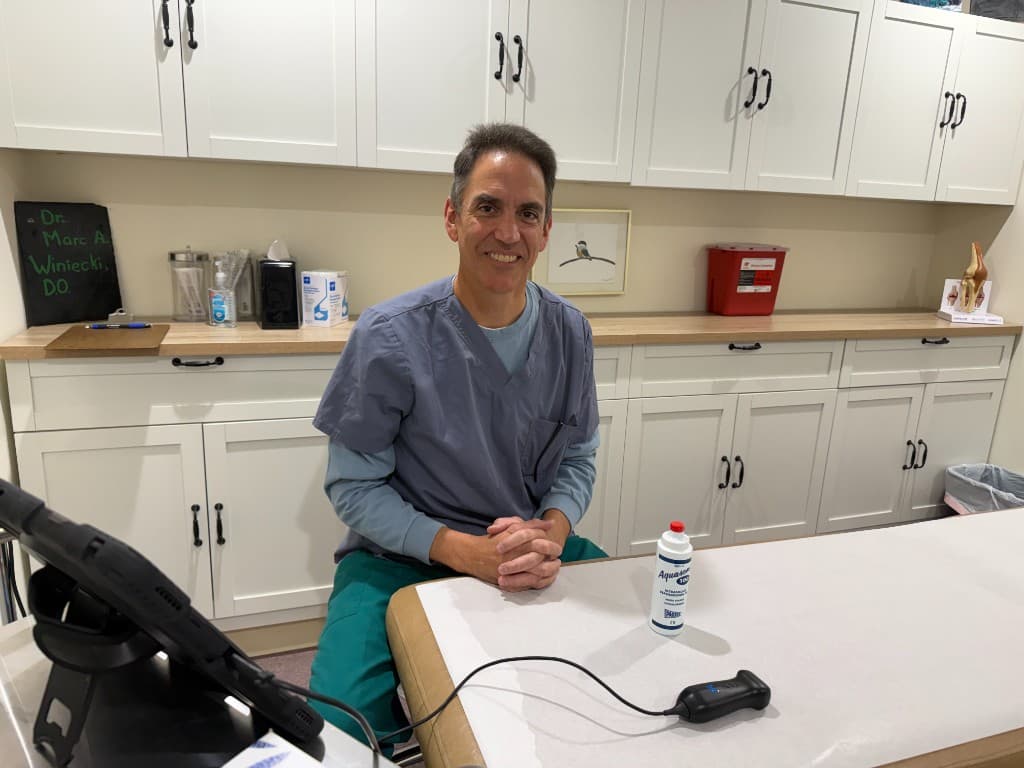
During your evaluation, Dr. Winiecki will determine whether PRP is appropriate based on your symptoms, exam findings, and overall health.
Regenerative orthopedic injections
Platelet-rich plasma (PRP)
Non-opioid regenerative orthopedic injection therapy:
Prolotherapy and platelet-rich plasma (PRP) are not covered by insurance.
About PRP at Monad Doc
What is PRP?
PRP is made from a small sample of your own blood. The platelets are concentrated, extracted, and injected into the problem area. Platelets carry signaling proteins and growth factors involved in healing; concentrating them at the site of injury stimulates the body's repair response.
PRP offers an option between conservative treatment and surgery. It is not a guarantee of pain relief or tissue repair, and results vary. The goal is to determine whether it makes sense for your condition.
What to know
- Uses your own blood
- Outpatient procedure; no surgery required
- May help certain joint and tendon conditions
- Worth considering when other treatments have not provided lasting relief
- Part of a regenerative approach focused on supporting tissue healing
Your PRP treatment at Monad Doc
Evaluation
We review your injury, symptoms, history, and goals.
Dr.
Winiecki examines the affected area and determines whether PRP is appropriate.
Blood draw
A small amount of blood is drawn from your arm.
PRP preparation
Your blood is processed in-office with our Bioventus XCELL PRP™ system to concentrate the platelet-rich portion.
Injection
PRP is injected into the treated area with ultrasound guidance.
Recovery and follow-up
Some soreness is normal.
Rest the treated area for about a week, avoid NSAIDs, and use Tylenol if needed.
Follow up in about three weeks for evaluation.
FAQs
PRP frequently asked questions
An explanation of PRP therapy at Monad Doc.
Is PRP right for you?
If you're dealing with persistent joint or tendon pain and want to explore a non-surgical option, PRP is worth considering. Dr. Winiecki will evaluate your condition, explain your options, and help determine whether regenerative orthopedic treatment makes sense for you.